 1388xx888xx
 1388xx888xx@gmail.com



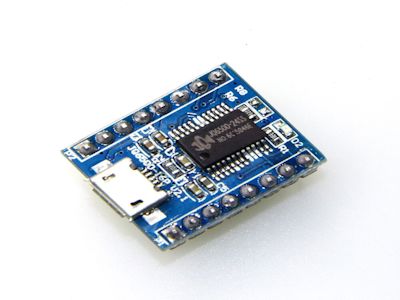
В мире, где технологии развиваются с головокружительной скоростью, электроника стала неотъемлемой частью нашей повседневной жизни. От смартфонов и компьютеров до умных домов и промышленных систем — всё основано на микроэлектронных компонентах. Среди них транзисторы играют ключевую роль, выступая в качестве фундаментальных строительных блоков. Однако в последние годы появился новый класс устройств — плагин транзисторы, которые обещают кардинально изменить ландшафт электроники. Почему именно они становятся революционным фактором? Это главный вопрос, который мы исследуем в этой статье, погружаясь в детали их работы, преимуществ и потенциального воздействия на будущее.
Введение в мир транзисторов: от классики к инновациям
Транзисторы, изобретённые в 1947 году, ознаменовали начало эпохи полупроводниковой электроники. Изначально они использовались для усиления сигналов и переключения в схемах, постепенно эволюционируя от биполярных транзисторов (BJT) к полевым транзисторам (FET). С течением времени миниатюризация, driven by Moore's Law, привела к созданию интегральных схем (ИС), где миллиарды транзисторов упаковываются на крошечных чипах. Это позволило разрабатывать более мощные и энергоэффективные устройства, такие как процессоры для компьютеров и мобильных гаджетов.
Но по мере приближения к физическим пределам кремниевых технологий, инженеры столкнулись с challenges, включая утечку тока, тепловыделение и ограничения в масштабировании. Именно здесь на сцену выходят плагин транзисторы — innovative устройства, designed to overcome these hurdles. Unlike traditional transistors, plug-in variants offer enhanced flexibility, scalability, and performance, making them a game-changer in modern electronics.
Что такое плагин транзисторы? Разбираем основы
Плагин транзисторы — это advanced type of transistors that incorporate plug-and-play functionality, allowing for easier integration and customization in electronic circuits. They are often based on novel materials beyond silicon, such as graphene, carbon nanotubes, or organic semiconductors, which provide superior electrical properties. Key characteristics include low power consumption, high switching speeds, and the ability to be manufactured using additive processes like 3D printing, reducing costs and environmental impact.
The term "plug-in" refers to their modular nature; они могут быть easily inserted or replaced in systems without complex soldering, similar to how USB devices plug into computers. This modularity not only simplifies design and maintenance but also enables rapid prototyping and upgrades. For instance, in IoT devices, plug-in transistors can be swapped out to add new features or improve efficiency, something that was previously cumbersome with soldered components.
Преимущества плагин транзисторов: почему они так важны
Одно из главных преимуществ — энергоэффективность. Traditional silicon transistors suffer from leakage currents, especially at small scales, leading to wasted power. Plug-in transistors, with their advanced materials, exhibit lower leakage and better on/off ratios, meaning devices can run longer on batteries. This is crucial for mobile electronics and green technologies, where energy conservation is paramount.
Additionally, their high performance is noteworthy. With switching speeds that can exceed those of silicon-based counterparts, plug-in transistors enable faster data processing and communication. This is vital for applications like 5G networks, artificial intelligence, and high-performance computing, where every nanosecond counts.
Scalability is another strong suit. As we approach the end of Moore's Law, plug-in transistors offer a path forward through 3D integration and heterogeneous materials. They can be stacked vertically or combined with other components, allowing for more transistors per unit area without the heat issues associated with traditional scaling.
Cost-effectiveness and sustainability also play a role. Manufacturing plug-in transistors often involves less expensive processes, such as inkjet printing or chemical vapor deposition, which reduce material waste. Moreover, their modular design means fewer electronic waste, as components can be reused or upgraded instead of discarded.
Применения в современной электронике: от потребительских устройств до промышленности
В потребительской электронике, плагин транзисторы уже находят применение в смартфонах, умных часах и носимых устройствах. For example, they improve battery life in smartphones by reducing power drain during idle states. In wearables, their small size and low power make them ideal for continuous health monitoring sensors.
In the automotive industry, these transistors are revolutionizing electric vehicles (EVs) and advanced driver-assistance systems (ADAS). They enhance the efficiency of power converters and motor controllers, leading to longer driving ranges and safer operations. Similarly, in renewable energy systems, such as solar inverters, plug-in transistors help maximize energy harvest by minimizing losses.
Промышленная автоматизация also benefits greatly. Programmable logic controllers (PLCs) and robotics rely on fast, reliable switching, which plug-in transistors provide. Their modularity allows for easy updates in factory settings, reducing downtime and maintenance costs.
Perhaps the most exciting area is the Internet of Things (IoT). With billions of connected devices, low-power and scalable components are essential. Plug-in transistors enable smarter, more efficient IoT nodes that can operate for years on small batteries, facilitating smart cities, agriculture, and home automation.
Технологические инновации и будущие тренды
The development of plug-in transistors is driven by ongoing research in nanomaterials and fabrication techniques. For instance, graphene-based transistors show promise for terahertz frequencies, opening doors to ultra-fast wireless communication. Organic semiconductors are being explored for flexible electronics, such as rollable displays and wearable sensors.
Integration with artificial intelligence is another frontier. AI algorithms can optimize the design and placement of plug-in transistors in circuits, leading to self-healing systems that adapt to failures. This could result in electronics that are more resilient and longer-lasting.
Looking ahead, we can expect plug-in transistors to play a key role in quantum computing and neuromorphic engineering. Their ability to handle quantum states or mimic neural networks could lead to breakthroughs in computing power and efficiency.
Вызовы и ограничения: что стоит на пути
Despite their potential, plug-in transistors face challenges. Manufacturing scalability is still an issue for some materials, like graphene, which is expensive to produce in large quantities. Reliability and longevity need improvement, as novel materials may degrade faster than silicon in certain environments.
Standardization is another hurdle. Without industry-wide standards, interoperability between different plug-in components could be problematic. Efforts by organizations like IEEE are underway to address this, but it will take time.
Cost remains a barrier for mass adoption. While long-term savings are expected, initial investment in new fabrication facilities is high. However, as technology matures, prices are likely to drop, similar to what happened with silicon chips.
Заключение: почему это революция
В заключение, плагин транзисторы действительно революционизируют современную электронику by addressing the limitations of traditional technologies. Their energy efficiency, performance, and modularity make them indispensable for the next generation of devices. As research progresses and adoption increases, we can anticipate a future where electronics are more powerful, sustainable, and accessible.
So, why are plug-in transistors the main question? Because they represent a paradigm shift—a move towards smarter, greener, and more flexible electronics that will shape our world for decades to come. Embrace this revolution; it's not just about technology, but about building a better future.
Следующий пост: Инновационные транзисторы для SMD монтажа повышение эффективности ваших устройств